
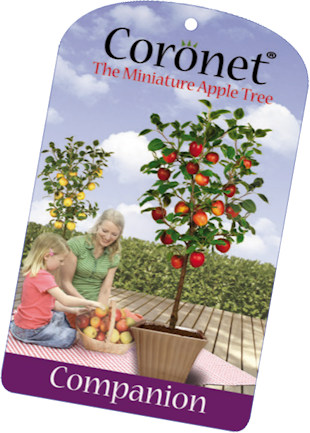
 A superb collection of proven garden apple varieties. They are easy to grow and will pollinate one another. A partner tree is needed.
Varieties include James Grieve, Cox’s Orange Pippin, Elstar, Katy and Topaz (organic)
- A partner tree is required
- Patio, Balcony or Garden
- Fruits in the first year
- Remains miniature
Features
Miniature
Coronet is a true miniature apple tree. It may be planted in the smallest space – mature height is only 5ft. (1.5m)
Fruiting
Coronets bear fruit even in their first year. You may purchase the tree in spring and pick fruit that autumn.
Garden or Patio
Coronets can be grown in the garden soil or in a pot. Being miniature they will not outgrow their pot and you can even take the tree with you if you move!
Easy to Grow
Coronets require almost no pruning and their small size makes them easy to maintain.
Varieties
Coronets offer a wide range of varieties, including types no longer found in shops.
Attractive
Coronets provide interest in the garden from spring till autumn; you can watch the apples develop and pick them in peak condition directly off the tree.
Gift
Coronets make the ideal living gift: it is unique, original and distinctive.
Before You Buy
Pollination
Companion varieties need a partner to produce apples. Any two of our varieties will suffice.
When to Plant
Coronets from garden centres (container grown) may be planted at any time of year. Coronets by mail order (bare rooted) should be planted between November and the beginning of April.
Planting in the Garden
Prepare a hole twice the size of the pot: 20ins (50cm) diam. Drive in a tree stake a little off-centre. Tease out any matted roots. Plant firmly in fertilised compost with the old soil mark of the tree at the top of the compost.
Planting in Pots
Coronets are ideal for containers. Pots should be at least 24ins (60cm) diameter. Plant firmly in fertilised compost with the old soil mark at the top of the compost. Water well after planting and keep compost moist.
Staking
Coronets need permanent staking. Use a long lasting stake. Tie the tree firmly using an adjustable strap tie or stretchable material.
After You Buy
Feeding
Feed in March with a slow release fertiliser (available in most garden shops). Apply only sufficient for the tree: too much is worse than none at all.
Pests and Diseases
Most pests control each other in the garden. However greenfly may need one spray. Apple scab is the main disease. Spray when the tree comes into leaf and three to four times afterwards at two to three week intervals. Do not spray at blossom time when bees are active. The small compact Coronet is easy to spray.
Fruiting
To help the tree become established it is best to reduce the number of apples to about six in the first year. Cut off any other fruitlets in June. In following years remove fruitlets to leave developing apples about 5cm [2ins] apart.
Pruning
Coronets are best left unpruned. If an occasional stray branch grows strongly cut it out in winter. Otherwise no pruning.